By hdwysy | 06 June 2026 | 0 Comments
How to Choose the Right BBQ Grill for Your Business: A CompleteB2B Buying Guide
1. Understand the Grill Types Before You SourceNot all grills serve the same customer. Mapping your target end-user to the right product category is thefirst step in building a profitable SKU assortment.
Charcoal Grills
The classic choice for authentic BBQ flavor. Charcoal grills remain dominant in outdoor enthusiastcommunities and are especially popular in the US, UK, and Australia. They offer lower unit costs, minimalmechanical complexity, and strong brand loyalty among grilling purists.
Best for: Outdoor lifestyle retailers, garden centers, sports & leisure chains.
Gas Grills (Propane & Natural Gas)Gas grills currently hold the largest market share - 47.88% of the global barbecue grill segment as of2025. They offer convenience, consistent heat, and fast ignition, making them the top seller for suburbanhomeowners and mid-market retailers.
Best for: Home improvement stores, online marketplace sellers, mid-to-high-end retail assortments.
Pellet Grills
The fastest-growing segment, advancing at a 6.54% CAGR through 2031. Pellet grills combine the ease ofgas with the smoky flavor of charcoal, and are attracting premium consumers willing to pay $500-$2,000+.If you're targeting the premium outdoor kitchen segment, this category deserves serious attention.
Best for: Premium lifestyle retailers, e-commerce DTC channels, hospitality & resort gifting programs.
Portable & Tabletop Grills
High-velocity, low-cost entry point These compact grills move fast in camping, RV, and tailgating seasons.
Excellent for seasonal promotions, gift-with-purchase bundles, and travel retail.
Best for: Sporting goods retailers, camping chains, convenience & impulse channels.
Commercial / Heavy-Duty Grills
Built for continuous use in foodservice environments - restaurants, catering companies, event venues.These units require robust steel construction (typically 304 stainless), higher BTU ratings, and compliancewith commercial safety standards.
Best for: Restaurant equipment distributors, foodservice wholesale buyers, event rental companies.
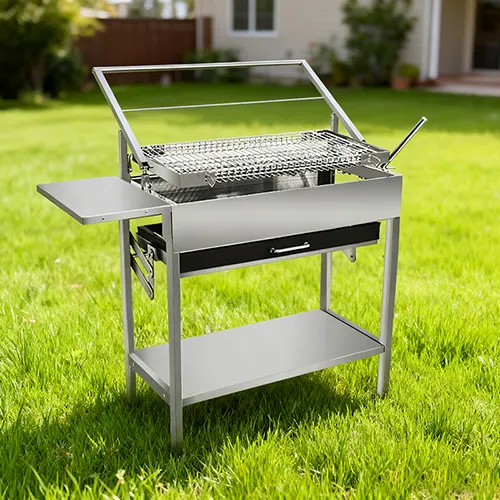
2. Key Specs That Matter in Bulk PurchasingWhen evaluating a supplier's product line, go beyond surface-level aesthetics. Here are the technicalspecifications that directly affect end-user satisfaction and your return rate:
3. Certifications: Non-Negotiable for Western Markets
One of the most common sourcing mistakes B2B buyers make is overlooking regulatory compliance - andit becomes an expensive lesson at customs or on store shelves.
Here's what you need by market:
United States: CSA (Canadian Standards Association) or UL certification for gas grills. California buyersmay also require CARB compliance.
European Union: CE marking is mandatory. Gas appliances must comply with the Gas Appliance
Regulation (EU) 2016/426. REACH compliance for materials. United Kingdom (post-Brexit): UKCA marking required for products placed on the GB market.Australia / New Zealand: AGA (Australian Gas Association) certification for gas grills.Always request certification documentation before placing your first order. A reputable manufacturer willhave these on file and can share them immediately.
4. What to Ask Your Supplier Before Signing a ContractDue diligence separates profitable partnerships from costly mistakes. Use this checklist when evaluating
any BBQ grill manufacturer or trading company:Production Capability What is your monthly production capacity (units per SKU)? Do you have in-house welding, powder coating, and assembly - or are these outsourced? What is your lead time for standard orders vs. custom orders?Quality Control
What QC checkpoints exist during production (IQC, IPQC, FQC)? Do you accept third-party factory audits (SGS, Bureau Veritas, Intertek)? What is your average defect rate, and what is your return/claims process?Customization & OEM/ODM
Can you accommodate private label packaging and logo branding? What is the MOQ for custom colorways or material upgrades? Do you offer ODM (custom design from spec) or OEM (produce to my design) services?Pricing & Terms
What is the FOB price at your nearest port?
What are your payment terms (T/T, L/C, Net 30)?
Do you offer volume pricing tiers, and at what quantity thresholds?
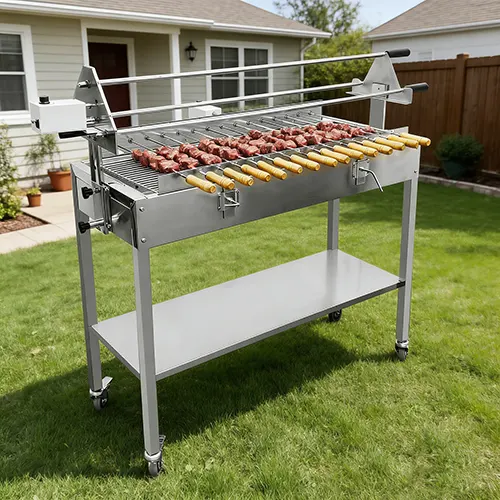
5. Packaging & Retail Readiness
For B2B buyers supplying retail chains, packaging is not an afterthought - it is part of the product. Endconsumers make purchase decisions within 3 seconds of shelf impact.
Key packaging considerations when ordering wholesale:
Box strength: Use double-wall corrugated (ECT-32 or higher) to withstand palletized shipping andwarehouse handling.
Retail insert quality: High-quality product inserts with lifestyle imagery significantly reduce perceivedrisk for in-store buyers.
Instruction clarity: Clear, illustrated multi-language assembly guides reduce customer service load foryour retail partners.
7. Why Sourcing Direct from a Manufacturer Matters
In a market where margins are under constant pressure, the difference between a trading company and adirect factory source can be 15-25% on unit cost - and that difference compounds at scale.When you work directly with a specialized BBQ grill manufacturer, you gain:
Price transparency: No middleman markup on raw materials or labor.
Faster issue resolution: Engineering changes, defect claims, and custom requests go directly to theteam that can act on them.
Supply chain stability: Direct relationships give you priority production slots during peak season whentrading companies get deprioritized.
Product co-development: The ability to develop exclusive SKUs or category innovations thatcompetitors can't replicate.
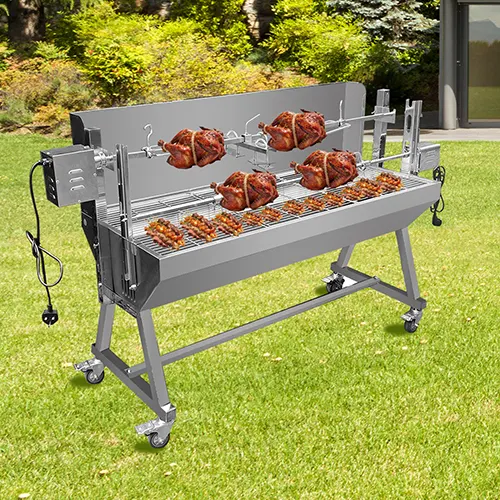
Ready to Build Your BBQ Grill Assortment?
The outdoor cooking market is growing, consumer spending on backyard experiences is resilient, and BBQgrills remain one of the most commercially viable categories in the outdoor living space.Whether you're building a new category from scratch or optimizing an existing line, the right manufacturingpartner makes all the difference.
Contact our team today to discuss your volume requirements, certification needs, and OEM/ODMpossibilities. We work with retailers, distributors, and foodservice buyers across North America, Europe,and Australia - and we're ready to build a long-term partnership around your business goals.
Published by HDWY Machinery Manufacturing Co., Ltd | Outdoor Cooking Equipment ManufacturerFor wholesale inquiries, visit our [https://hdwysy.com] or email us directly.
Charcoal Grills
The classic choice for authentic BBQ flavor. Charcoal grills remain dominant in outdoor enthusiastcommunities and are especially popular in the US, UK, and Australia. They offer lower unit costs, minimalmechanical complexity, and strong brand loyalty among grilling purists.
Best for: Outdoor lifestyle retailers, garden centers, sports & leisure chains.
Gas Grills (Propane & Natural Gas)Gas grills currently hold the largest market share - 47.88% of the global barbecue grill segment as of2025. They offer convenience, consistent heat, and fast ignition, making them the top seller for suburbanhomeowners and mid-market retailers.
Best for: Home improvement stores, online marketplace sellers, mid-to-high-end retail assortments.
Pellet Grills
The fastest-growing segment, advancing at a 6.54% CAGR through 2031. Pellet grills combine the ease ofgas with the smoky flavor of charcoal, and are attracting premium consumers willing to pay $500-$2,000+.If you're targeting the premium outdoor kitchen segment, this category deserves serious attention.
Best for: Premium lifestyle retailers, e-commerce DTC channels, hospitality & resort gifting programs.
Portable & Tabletop Grills
High-velocity, low-cost entry point These compact grills move fast in camping, RV, and tailgating seasons.
Excellent for seasonal promotions, gift-with-purchase bundles, and travel retail.
Best for: Sporting goods retailers, camping chains, convenience & impulse channels.
Commercial / Heavy-Duty Grills
Built for continuous use in foodservice environments - restaurants, catering companies, event venues.These units require robust steel construction (typically 304 stainless), higher BTU ratings, and compliancewith commercial safety standards.
Best for: Restaurant equipment distributors, foodservice wholesale buyers, event rental companies.
2. Key Specs That Matter in Bulk PurchasingWhen evaluating a supplier's product line, go beyond surface-level aesthetics. Here are the technicalspecifications that directly affect end-user satisfaction and your return rate:
| Specification | What to Look For |
| Material | 304 stainless steel for premium/commercial; cold-rolled steel with powder coat forentry-level |
| Cooking Area | 400-600 sq. in. for residential; 800+ sq. in. for commercial use |
| BTU Output | 30,000-60,000 BTU for gas grills (residential); 90,000+ for commercial |
| Lid & Body Thickness | Min. 1.5mm for durability; 2mm+ for premium positioning |
| Ignition System | Piezo or electronic push-button; ask for MTTF (mean time to failure) data |
| Portability | Wheel diameter, locking casters, folding shelf designs for retail appeal |
| Assembly | Number of parts, estimated assembly time - critical for retail packaging UX |
| Grate Material | Cast iron (heat retention), porcelain-coated (easy clean), or stainless steel |
One of the most common sourcing mistakes B2B buyers make is overlooking regulatory compliance - andit becomes an expensive lesson at customs or on store shelves.
Here's what you need by market:
United States: CSA (Canadian Standards Association) or UL certification for gas grills. California buyersmay also require CARB compliance.
European Union: CE marking is mandatory. Gas appliances must comply with the Gas Appliance
Regulation (EU) 2016/426. REACH compliance for materials. United Kingdom (post-Brexit): UKCA marking required for products placed on the GB market.Australia / New Zealand: AGA (Australian Gas Association) certification for gas grills.Always request certification documentation before placing your first order. A reputable manufacturer willhave these on file and can share them immediately.
4. What to Ask Your Supplier Before Signing a ContractDue diligence separates profitable partnerships from costly mistakes. Use this checklist when evaluating
any BBQ grill manufacturer or trading company:Production Capability What is your monthly production capacity (units per SKU)? Do you have in-house welding, powder coating, and assembly - or are these outsourced? What is your lead time for standard orders vs. custom orders?Quality Control
What QC checkpoints exist during production (IQC, IPQC, FQC)? Do you accept third-party factory audits (SGS, Bureau Veritas, Intertek)? What is your average defect rate, and what is your return/claims process?Customization & OEM/ODM
Can you accommodate private label packaging and logo branding? What is the MOQ for custom colorways or material upgrades? Do you offer ODM (custom design from spec) or OEM (produce to my design) services?Pricing & Terms
What is the FOB price at your nearest port?
What are your payment terms (T/T, L/C, Net 30)?
Do you offer volume pricing tiers, and at what quantity thresholds?
5. Packaging & Retail Readiness
For B2B buyers supplying retail chains, packaging is not an afterthought - it is part of the product. Endconsumers make purchase decisions within 3 seconds of shelf impact.
Key packaging considerations when ordering wholesale:
Box strength: Use double-wall corrugated (ECT-32 or higher) to withstand palletized shipping andwarehouse handling.
Retail insert quality: High-quality product inserts with lifestyle imagery significantly reduce perceivedrisk for in-store buyers.
Instruction clarity: Clear, illustrated multi-language assembly guides reduce customer service load foryour retail partners.
7. Why Sourcing Direct from a Manufacturer Matters
In a market where margins are under constant pressure, the difference between a trading company and adirect factory source can be 15-25% on unit cost - and that difference compounds at scale.When you work directly with a specialized BBQ grill manufacturer, you gain:
Price transparency: No middleman markup on raw materials or labor.
Faster issue resolution: Engineering changes, defect claims, and custom requests go directly to theteam that can act on them.
Supply chain stability: Direct relationships give you priority production slots during peak season whentrading companies get deprioritized.
Product co-development: The ability to develop exclusive SKUs or category innovations thatcompetitors can't replicate.
Ready to Build Your BBQ Grill Assortment?
The outdoor cooking market is growing, consumer spending on backyard experiences is resilient, and BBQgrills remain one of the most commercially viable categories in the outdoor living space.Whether you're building a new category from scratch or optimizing an existing line, the right manufacturingpartner makes all the difference.
Contact our team today to discuss your volume requirements, certification needs, and OEM/ODMpossibilities. We work with retailers, distributors, and foodservice buyers across North America, Europe,and Australia - and we're ready to build a long-term partnership around your business goals.
Published by HDWY Machinery Manufacturing Co., Ltd | Outdoor Cooking Equipment ManufacturerFor wholesale inquiries, visit our [https://hdwysy.com] or email us directly.
Leave a Reply
Your email address will not be published.Required fields are marked. *